Showing posts with label Intelligence. Show all posts

Monday, 13 August 2007

China Enacting a High-Tech Plan to Track People

Starting this month in a port neighborhood and then spreading across Shenzhen, a city of 12.4 million people, residency cards fitted with powerful computer chips programmed by the same company will be issued to most citizens.

Data on the chip will include not just the citizen’s name and address but also work history, educational background, religion, ethnicity, police record, medical insurance status and landlord’s phone number. Even personal reproductive history will be included, for enforcement of China’s controversial “one child” policy. Plans are being studied to add credit histories, subway travel payments and small purchases charged to the card.


Homeland Security tests automated "Hostile Intent" detector

An uncomfortable fact of modern security is that too many people go through transit hubs and to public events for all of them to be screened both efficiently and thoroughly. As a result, there has been a lot of attention focused on producing automated systems that screen crowds without the need for human intervention.

Automated biometric scans have serious limits, however, in that they can only identify people who have already been classified as threats. The Department of Homeland Security is hoping to overcome that limitation by automating the identification of individuals whose behavior suggests they pose a threat via a program dubbed "Hostile Intent."

Tuesday, 31 July 2007

Biometrics Shifting from Defensive to Offensive Uses in Iraq


America's recently-passed 2007 supplemental defense funding bill (#2) included $320 million for an unusual weapon: biometrics. Fingerprinting, iris scanning, certain approaches to automated facial recognition, DNA, and more are all part of biometrics, which seeks to identify humans based on unique physical characteristics.

Friday, 22 June 2007

An SR-72 in the works?

Ten years after the Air Force retired the SR-71 spy plane, Lockheed Martin’s legendary Skunk Works appears to be back at work developing a new Mach-6 reconnaissance plane, sources said.


The Air Force has awarded Lockheed’s Advanced Development Projects arm a top-secret contract to develop a stealthy 4,000-mph (6,437 km/h) plane capable of flying to altitudes of about 100,000 feet, with transcontinental range. The plan is to debut the craft around 2020.

Read More

U.S. general laments Google Earth capability

The head of U.S. Air Force intelligence and surveillance on Thursday said data available commercially through online mapping software such as Google Earth posed a danger to security but could not be rolled back.

"To talk about danger is, if I may, really is irrelevant because it's there," said Lt. Gen. David Deptula, deputy chief of staff for intelligence, surveillance and reconnaissance.

Tuesday, 19 June 2007

French Research Agency Validates Flapping Wings for Micro Drone


Flapping wings might be better than rotors for a small surveillance UAV, engineers with the French aerospace research agency ONERA said June 18 at the 47th Paris Air Show.

ONERA’s simulation studies on a third-generation micro air vehicle dubbed Remanta show that such wings used less energy than a mini-helicopter design while delivering speedy flight, hover, endurance and agility, engineers Agnès Luc Boulah and Bruiec Danet said.

The Remanta is a partial demonstrator with a 15-centimeter wing and endurance of around 10 minutes. The micro-drone would fly on a programmed route into confined spaces, perform urban reconnaissance and send imagery for target acquisition and designation. The range would be a few hundred meters and include day/night capability.

Actuators would drive the flapping carbon-fiber wings. The major challenge is finding the power source, which must be compact and deliver 10 to 20 watts. Advances in power cells for mobile phones show promise.

A working demonstrator could be fielded in 10 years, the engineers said.

Labs in Cranfield and Shrivenham in Britain, German researchers and DARPA are also working on flapping wings for micro aerial vehicles.

Monday, 18 June 2007

Hi-tech tool tracks city graffiti

US cities are battling the problem of vandalism head on with a hi-tech system that analyses and tracks graffiti and its perpetrators.

In the US, cleaning up graffiti is estimated to cost about $10bn (£5bn) per year. Rather than simply obliterate the graffiti, the system keeps a permanent record of it which allows police to compile a database of similar daubings.

Thursday, 14 June 2007

Can cyborg moths bring down terrorists?

A moth which has a computer chip implanted in it while in the cocoon will enable soldiers to spy on insurgents.

At some point in the not too distant future, a moth will take flight in the hills of northern Pakistan, and flap towards a suspected terrorist training camp.

But this will be no ordinary moth.

Inside it will be a computer chip that was implanted when the creature was still a pupa, in the cocoon, meaning that the moth’s entire nervous system can be controlled remotely.

Read More

Monday, 11 June 2007

Lasers for video surveillance

Researchers at the Oak Ridge National Laboratory (ORNL) have built a new optical surveillance based on lasers. Their Laser-Based Item Monitoring System (LBIMS) is designed to protect high-value items in high security environments.

It’s also supposed to respect your privacy and be the equivalent of cameras with a 10,000-megapixel resolution. The LBIMS can be used in situations where conventional surveillance systems cannot be employed, such as areas where video surveillance has been specifically prohibited and areas where a RFID system could trigger an explosion. It should become commercially available this year.

Wednesday, 6 June 2007

What the attacks on Estonia have taught us about online combat.


In Estonia, you can pay for your parking meter via cell phone, access free Wi-Fi at every gas station, and, as of two months ago, vote in national elections from your PC.
The small, wired country can now add another item to this list of technological achievements: It's the first government to get targeted for large-scale cyberwarfare.

Tuesday, 29 May 2007

Face recognition next in terror fight

Homeland Security leaders are exploring futuristic and possibly privacy-invading technology aimed at finding terrorists and criminals by using digital surveillance photos that analyze facial characteristics.

The government is paying for some of the most advanced research into controversial face-recognition technology, which converts photos into numerical sequences that can be instantly compared with millions of photos in a database.

Monday, 28 May 2007

Cyber-thieves 'richer than drug dealers'

A major global malware epidemic is putting greater wealth into the hands of criminals than ever before, according to new research from security software vendor PC Tools.

The company's Malware Research Center has witnessed disturbing trends such as blended attacks, a proliferation of 'toxic' root-kits and a 120 per cent increase in new crime-based threats.


Wednesday, 23 May 2007

Cyber terror threat is growing


Terrorists could attempt to cause economic chaos or plane crashes in an electronic attack on the UK's computer networks John Reid, the Home Secretary, said yesterday.


Mr Reid's warning of the "devastating consequences" of cyber terrorism came as he said the reshaping of the Home Office would enable him to "wake up and think about the security of the nation first and foremost every morning".


Tuesday, 22 May 2007

Controlled Robots Anyone Can Build


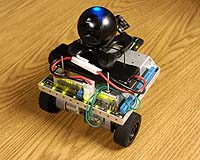
Carnegie Mellon University researchers have developed a new series of robots that are simple enough for almost anyone to build with off-the-shelf parts, but are sophisticated machines that wirelessly connect to the Internet.


The robots can take many forms, from a three-wheeled model with a mounted camera to a flower loaded with infrared sensors. They can be easily customized and their ability to wirelessly link to the Internet allows users to control and monitor their robots' actions from any Internet-connected computer in the world.

New Recon Robot For Military And Civil Use

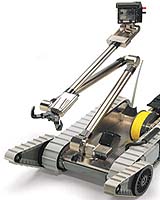
Boeing and iRobot have announced they have signed a teaming agreement to design and develop a next-generation, small unmanned ground vehicle (SUGV) called the SUGV Early. The vehicle will provide military, civil and commercial users with unprecedented reconnaissance and secure, real-time intelligence capabilities.

Thursday, 19 April 2007

Open Source Intelligence

All the world's intelligence services subscribe to it. It is arguably the world's best intelligence. Its daily brief is read avidly by anyone who matters in governance the world over. Heads of state and government, foreign and defense ministers, intel agency chiefs and corporate CEOs, from Beijing to Brussels and from Washington to Wellington, subscribe to what has become the gold standard for objective global strategic analysis.

Oxford Analytica is the brand.

OA's latest contribution is "The Global Stress Points Matrix," a list of 20 potential points and where they rank from "negligible danger" of stress to "Very High" and "Extreme." Overlapping "High," "Very High," and "Extreme" stress points are: 1. United States/Iran: U.S. strike on Iran 2. United States: Deep Recession 3. China/Taiwan: Armed Hostilities

Read More